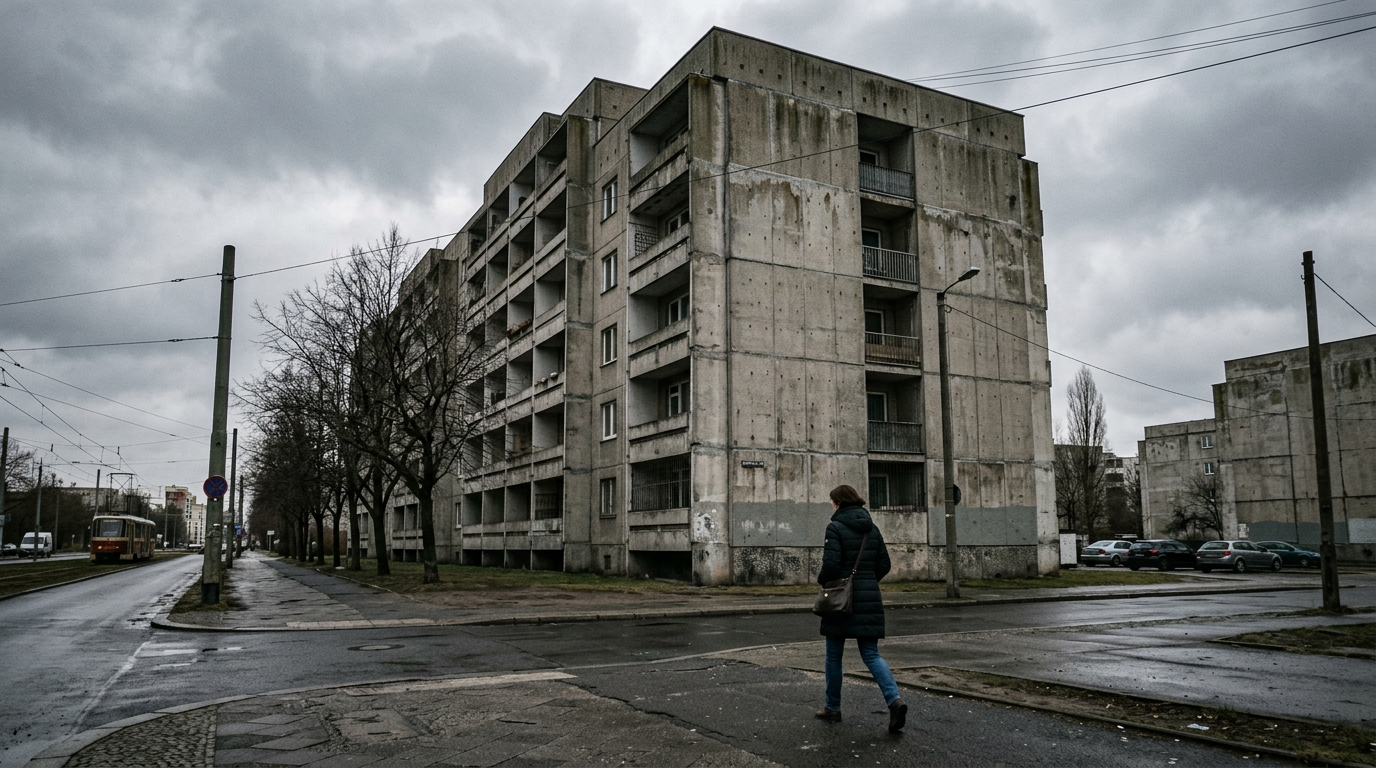
The Cold War ended, officially, in the early 1990s. The physical infrastructure of the conflict — the missile silos, the listening stations, the underground command centres — has largely been decommissioned, demolished or converted to other uses. But the Cold War's legacy in everyday life is more durable and more pervasive than most people recognise. It shaped the internet you are reading this on, the suburban neighbourhood you may live in, the highway system you drive on, and the way governments around the world think about information, surveillance and national security. Understanding where these things came from changes how you see them.
For people who came of age in the 1960s and 1970s — who grew up doing duck-and-cover drills, who remember the Cuban Missile Crisis as a lived rather than historical event — the Cold War's ongoing relevance is not a revelation. For younger generations, and for those who studied history in ways that treated the Cold War primarily as a geopolitical narrative, the depth of its structural legacy can be genuinely surprising.
The Internet's Origins in Nuclear Strategy
ARPANET — the network that became the internet — was funded by the United States Department of Defense in the late 1960s, at least partly with the goal of creating a communications network that could survive a nuclear strike. The design principle that made it technically innovative — packet-switching, which routes data through multiple possible paths rather than a single dedicated line — was motivated by the need for resilience under conditions of physical destruction.
Canada's role in the early development of networked communication was significant: the National Research Council of Canada was connected to ARPANET in 1971, one of the first non-American institutions to join the network. The cold logic of nuclear deterrence — the need to ensure that communication could persist even if major nodes were destroyed — produced a decentralised architecture that continues to define how information moves around the world sixty years later.
Suburban Expansion and Civil Defence Planning
The rapid expansion of suburban development in North America during the 1950s and 1960s was not driven solely by economic prosperity and the availability of the automobile, though both were significant factors. Civil defence planning also played a role. Urban dispersal — the policy of encouraging population distribution away from concentrated city centres — was explicitly promoted by both the American and Canadian governments as a means of reducing the strategic value of cities as nuclear targets and dispersing the civilian population in ways that might reduce casualties in the event of attack.
Canadian civil defence documents from the period explicitly discussed suburban development in these terms. The freeway systems that were built to move people out of cities rapidly — and that are now congested commuter arteries — were partly designed as evacuation routes. The physical shape of the metropolitan areas that many Canadians inhabit today carries, embedded within it, the logic of a conflict that ended three decades ago.
The Diefenbunker and Canada's Underground Infrastructure
Between 1959 and 1994, a four-storey underground bunker near Carp, Ontario — built during the government of Prime Minister John Diefenbaker and known informally as the Diefenbunker — stood ready to house essential government personnel in the event of nuclear attack. Similar facilities existed across Canada, forming a network of hardened government sites that the public was largely unaware of during the Cold War years.
The Diefenbunker is now a Cold War museum, and visits provide an unusually concrete sense of how comprehensively the nuclear threat was institutionalised into government planning. The facility was designed to sustain 535 people for thirty days after a nuclear strike — long enough, in theory, for government to reorganise and begin managing the aftermath of catastrophe.
"The Cold War's legacy in everyday life is more durable than most people recognise. It shaped the internet, the suburban neighbourhood, the highway system — and how governments think about information and security."
The Surveillance Architecture That Outlasted Its Context
The systems of intelligence gathering, signals interception and domestic surveillance that were developed during the Cold War were, by the end of the conflict, deeply embedded in the institutional infrastructure of every major Western government. The Five Eyes alliance — the intelligence-sharing arrangement between the United States, Canada, the United Kingdom, Australia and New Zealand that was formalised during the Cold War — remains the most comprehensive signals intelligence partnership in the world.
When the revelations of Edward Snowden in 2013 disclosed the extent of digital surveillance conducted through the Five Eyes network, many observers treated it as a new development. In structural terms, it was not. What had changed was the scale and technical capability of systems whose conceptual architecture dated to the Cold War period. The institutions, legal frameworks and international agreements that govern surveillance in Canada today are, in significant respects, Cold War institutions updated for the digital era.
The point of tracing these lineages is not to suggest that the Cold War determined everything that followed, or that the choices made under the shadow of nuclear conflict are immutable. It is, rather, to recognise that the present is always shaped by particular pasts — and that understanding which past shapes which present is one of the more useful things that historical literacy makes possible.