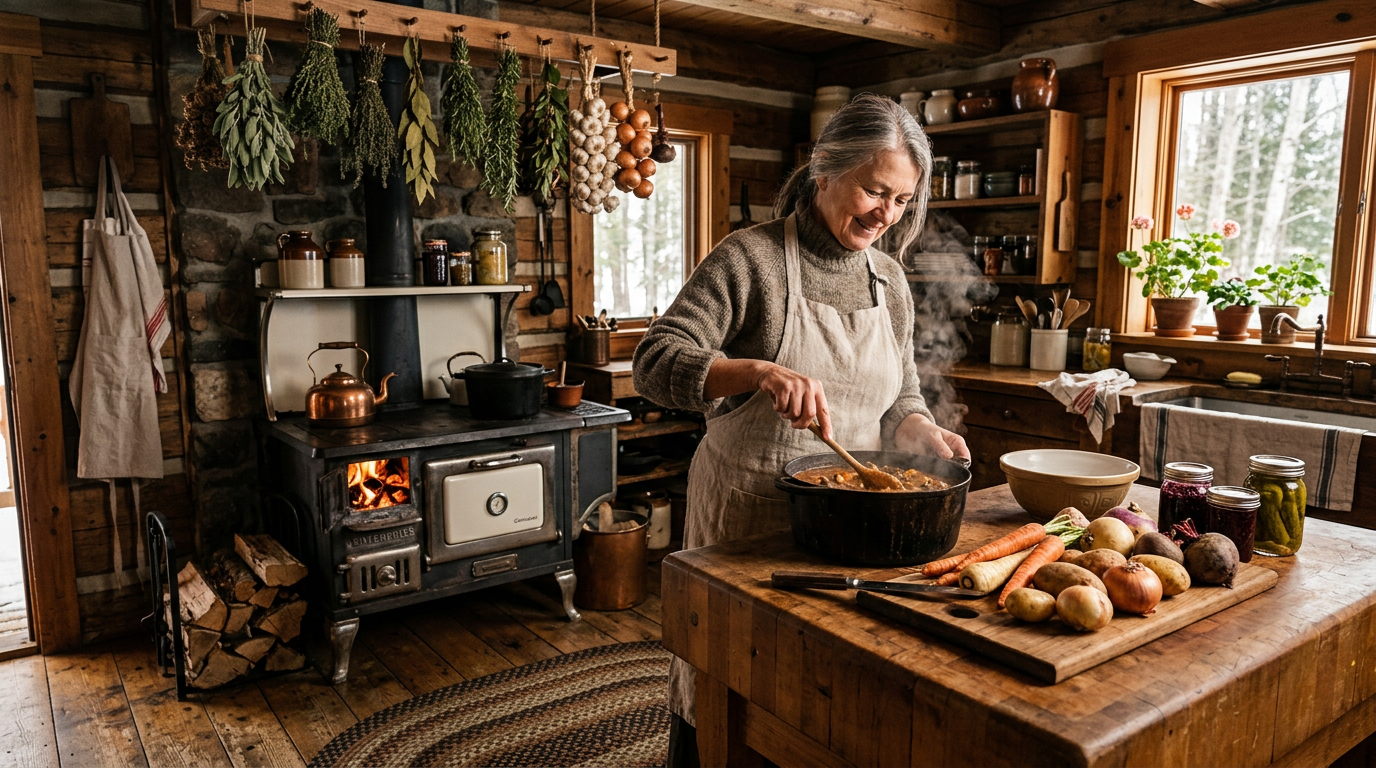
For much of the late twentieth century, traditional Canadian cooking occupied an awkward position in the country's food culture. It was acknowledged but rarely celebrated — displaced in urban restaurants and food media by the cuisines of European, Asian and Middle Eastern immigrants, and by the global food culture that media and travel brought into Canadian homes. The question of what "Canadian food" actually was tended to produce more confusion than conviction. Poutine, butter tarts, bannock, Nanaimo bars — these were mentioned, but rarely held up as a serious culinary tradition worth sustained attention.
Something has changed in the past decade. Across Canada, from the fine dining restaurants of Montréal and Toronto to the farmers' markets and supper clubs of smaller cities and rural communities, there is a genuine and growing interest in traditional and regional Canadian food traditions. The movement is diverse in its motivations — some of it is driven by environmental concerns about food miles and industrial agriculture, some by a renewed interest in Indigenous food traditions, some by a simple nostalgia for foods associated with childhood and family — but its cumulative effect is a meaningful shift in how Canadians relate to their culinary heritage.
The Regional Diversity That Most People Don't Know
One of the obstacles to a coherent national food identity is the sheer regional diversity of traditional Canadian cuisine. The food cultures of Newfoundland, Québec, the Prairies, the Pacific Northwest and the territories are substantially different from one another — shaped by different natural environments, different settlement histories and different cultural influences. Treating them as a single tradition is roughly as coherent as treating all of European cuisine as a single tradition.
What this diversity offers, once it is recognised rather than glossed over, is an extraordinarily rich material to work with:
- Atlantic Canada has a seafood tradition — salt cod, lobster, dulse, rappie pie in Nova Scotia's Acadian communities — that is deeply rooted in the maritime environment and represents some of the most distinctive regional cooking in North America.
- Québec has a French-Canadian culinary tradition of genuine depth: tourtière, soupe aux pois, cipaille, les fèves au lard, the extraordinary charcuterie traditions that developed in isolation from France over centuries. Montréal's smoked meat, poutine and bagel culture represent a distinctive urban food identity that has no real parallel elsewhere in the country.
- The Prairies offer a cooking tradition shaped by Ukrainian, Mennonite and First Nations influences alongside the dominant British settler heritage — perogy culture, saskatoon berry preparations, bison cookery both traditional and revived.
- Indigenous food traditions across the country — bannock in many forms, three sisters cuisine (corn, beans and squash), wild game preparations, coastal seafood practices — represent the oldest food culture on the continent, and are increasingly being engaged with, on their own terms, by Indigenous chefs and food writers who are working to reclaim and revitalise them.
Why This Revival Matters Beyond Nostalgia
The renewed interest in traditional Canadian food is not merely sentimental. It intersects with several broader trends that give it genuine cultural weight:
"Old recipes carry not just flavour, but identity and memory. The revival of traditional Canadian cooking is, at its core, a conversation about what kind of country this is and where it came from."
The food sovereignty movement — the argument that communities should have meaningful control over their food systems — has made traditional and regional food traditions newly relevant as alternatives to industrialised food supply chains. Growing and eating locally, understanding the provenance of ingredients, maintaining culinary knowledge that might otherwise be lost: these are practical expressions of a broader commitment to food independence that aligns naturally with traditional cooking practices.
The environmental argument also converges with traditional food practices in interesting ways. The food systems that produced traditional Canadian cuisines were, by necessity, adapted to local ecological conditions — using what the land and water provided, wasting little, preserving through methods (smoking, fermenting, salting) that required no refrigeration. The sustainability credentials of these approaches are genuine, and are increasingly being recognised in food culture circles that take environmental concerns seriously.
Perhaps most significantly, the revival of traditional Canadian food represents a conversation about identity — about what it means to have a food culture that is genuinely yours rather than borrowed. In a country where identity questions are always present and often complicated, the kitchen turns out to be a surprisingly productive place to work some of them through. The cook who learns her grandmother's tourtière recipe, or who seeks out an Indigenous elder's knowledge of traditional plant uses, or who visits the salt fish producers of Newfoundland's outports, is doing something that goes beyond gastronomy. They are finding a particular kind of connection to the place they come from — and finding, in old recipes, something worth preserving.