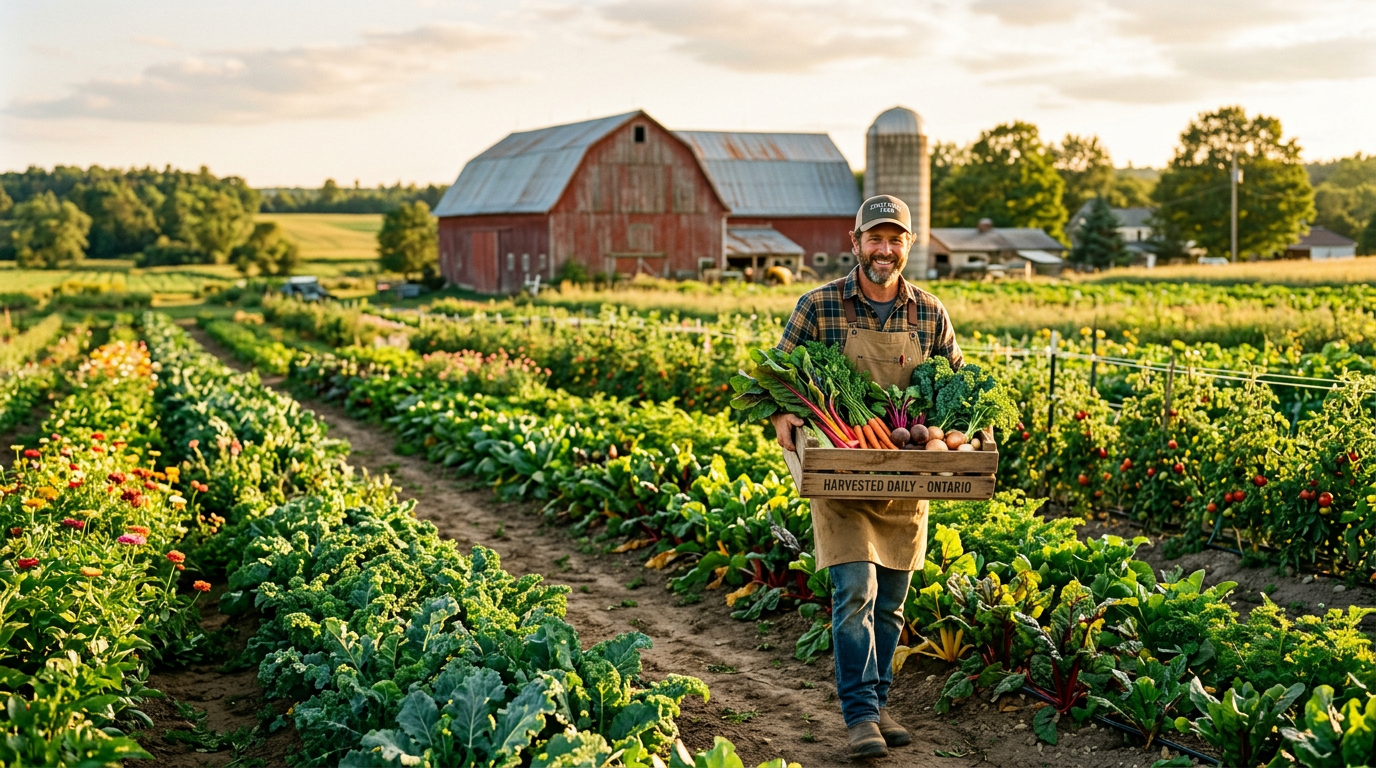
The phrase "farm to table" has been in use long enough to have accumulated the inevitable associations of marketing language — used loosely on menus, appropriated by chains that have little genuine connection to the farmers whose names appear on their boards. Yet the underlying practice, and the movement it describes, is real, consequential and far more substantive than its clichéd formulation suggests. In communities across Canada, the shortening of the supply chain between producer and consumer is producing changes that go well beyond the quality of food on the plate.
The farm-to-table movement in Canada is not a single thing. It includes the farmers' market networks that have expanded substantially in every province over the past two decades; the community-supported agriculture (CSA) programmes that link urban households directly with farms; the restaurant movement that has made relationships with specific local producers a defining feature of how serious kitchens operate; and the food policy infrastructure — municipal food councils, provincial buy-local procurement policies — that is beginning to reshape how institutional buyers from schools to hospitals source their ingredients.
The Economic Reality of Local Food Systems
One of the persistent questions about local food — whether it is economically viable at a meaningful scale, or whether it is primarily an option for affluent consumers willing to pay a premium — has been substantially addressed by research conducted over the past decade. The picture is more nuanced than either the enthusiasts or the sceptics have typically suggested.
Studies of farmers' market economics in Ontario, British Columbia and Manitoba have consistently found that direct-marketing channels — including farmers' markets, CSA subscriptions and direct restaurant sales — allow farmers to capture a significantly higher share of the final sale price than conventional supply chains allow. For farms of a certain scale — typically smaller operations producing diverse products rather than single commodity crops — direct marketing is economically superior, not merely environmentally preferable.
The economic impact extends beyond the farm gate. Research by the Food Policy Council of Halifax, and similar studies in Toronto and Vancouver, has found that food expenditure at local farmers' markets circulates within the local economy at significantly higher rates than expenditure at large retailers. The multiplier effect of locally-spent food dollars — the way they cycle through local businesses, local employment and local services rather than flowing to corporate headquarters elsewhere — is meaningful enough to justify the attention that municipal economic development offices are beginning to pay to local food system development.
The Social Dimensions of Local Food
The economic arguments for local food systems are well-established. Less often discussed, but arguably equally significant, are the social dimensions of what happens when communities develop stronger connections to the sources of their food.
"The farmers' market is not just a place to buy vegetables. It is one of the few remaining public spaces in many communities where people regularly encounter their neighbours, engage with producers, and experience something like a genuine public square."
Research on social cohesion in communities with well-developed local food systems finds consistently higher levels of what sociologists call "bridging social capital" — the connections between people of different backgrounds, ages and circumstances that make communities more resilient and more capable of collective action. The farmers' market, the community garden, the food-sharing network: these are spaces where people encounter one another outside the contexts of work or consumption that dominate most social interaction in urban environments. Their value is not reducible to the food that changes hands within them.
What Participation Actually Looks Like
For people who are interested in engaging with local food systems but uncertain where to start, the practical landscape in most Canadian cities is richer than it might appear:
- Community Supported Agriculture (CSA) programmes allow households to purchase a "share" of a farm's annual harvest — typically a weekly box of seasonal produce — directly from the farm. The relationship is genuinely direct: many CSA farms offer opportunities to visit, and some organise member work days. Local Harvest Canada and similar directories list programmes across the country.
- Farmers' markets are the most accessible entry point. Beyond their function as produce markets, many host local meat producers, artisan food makers, and small-scale prepared food vendors whose products are simply not available through conventional retail channels.
- Restaurant relationships are worth paying attention to. Restaurants that name their suppliers and describe their sourcing practices are typically making real commitments rather than marketing gestures. The quality difference is often perceptible; the relationship it represents is worth supporting.
The farm-to-table movement has survived the phase of fashionability that attached to it in the early 2010s and has continued to grow in substance and reach in ways that suggest it reflects a genuine shift in values rather than a trend. The Canadians who are driving it — the farmers, the cooks, the community food advocates, the ordinary households who have decided that knowing where their food comes from matters — are participating in something that is, quietly and practically, making the country's food systems more resilient, more equitable and more deeply rooted in the places and communities they serve.