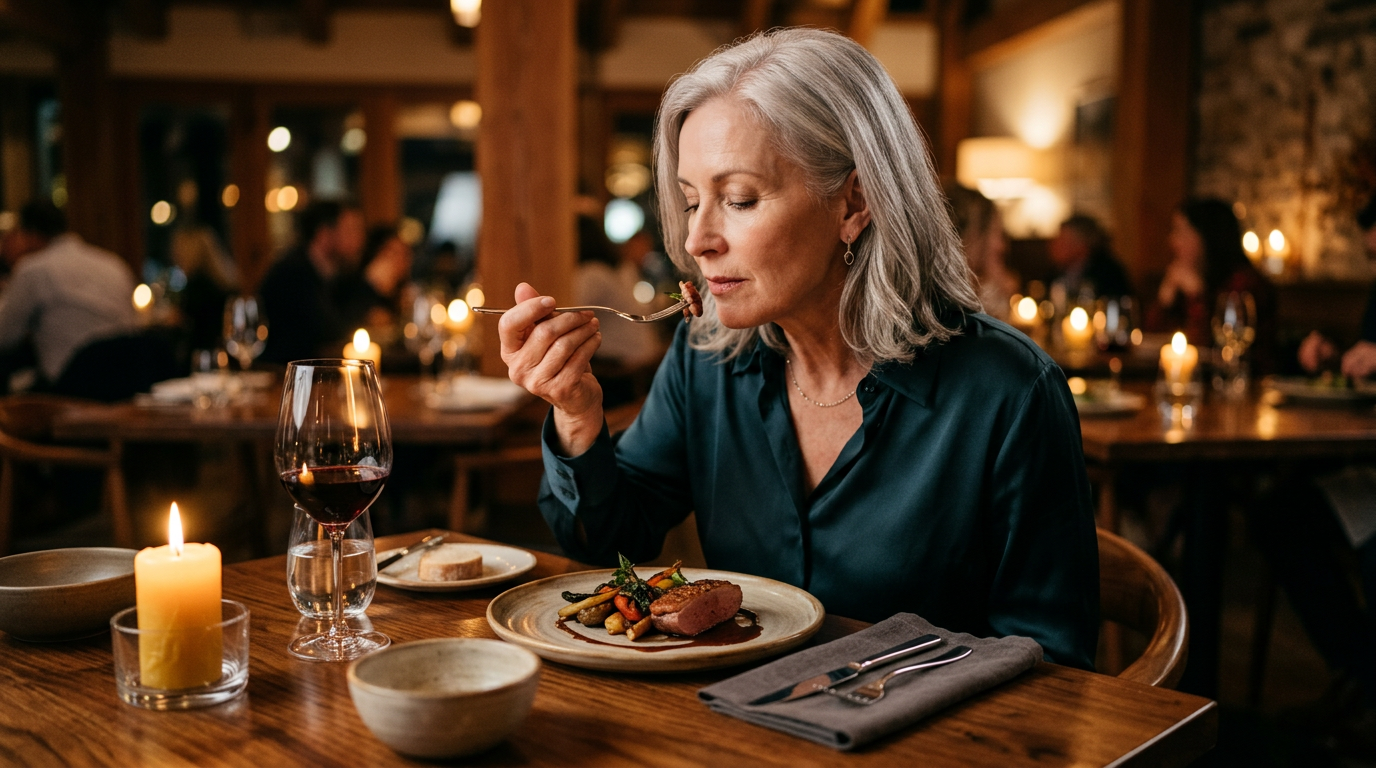
There is a particular kind of domestic mystery that most people over 50 will recognise. A dish that you made for years — that your family has always loved, that you remember as a reliable pleasure — no longer tastes quite the way it should. Or you find yourself reaching, in restaurants, for flavours you never previously sought: more pungent cheeses, more assertively seasoned food, a preference for bitterness in coffee or wine that would have been unappealing at 30. Your palate has changed. The question is why, and what, if anything, you can or should do about it.
The science of how taste perception changes with age is a legitimate and well-developed field of sensory research. The changes it describes are real, predictable and, for the most part, not causes for concern — they are part of the natural variation in how the human sensory system operates across a lifetime. Understanding them provides something genuinely useful: a more accurate account of what you are tasting, and a more informed basis for the choices you make about food.
The Biology of Taste Perception
Human taste perception relies on several interlocking systems. Taste buds — the sensory receptor cells concentrated on the tongue and, in smaller numbers, the palate and throat — detect the five primary taste qualities: sweet, salty, sour, bitter and umami. The sense of smell, which contributes enormously to what we experience as "flavour" (the integrated sensory experience of eating), operates through olfactory receptors in the nasal cavity. And the trigeminal system, which detects sensations like heat, cold and the burn of capsaicin, adds a further dimension to the sensory experience of food.
Each of these systems undergoes changes with age, but at different rates and in different ways:
- Taste bud turnover slows. Taste bud cells are replaced every ten to fourteen days in young adults. This renewal rate slows with age, reducing the density of functional taste receptors and affecting the intensity with which basic taste qualities are perceived. Research published in the journal Chemical Senses found that adults over 60 typically show reduced sensitivity to sweet and salty tastes relative to younger adults, while sensitivity to bitter and sour tastes is less significantly affected.
- Olfactory function declines more substantially. The sense of smell peaks in early adulthood and declines progressively thereafter, with the most significant changes typically occurring after 60. Since approximately 80% of what we experience as flavour is actually aroma processed through the olfactory system, this decline has a proportionally large effect on the overall eating experience. Foods that depend heavily on volatile aromatic compounds — fresh herbs, wine, delicately flavoured fish — may taste "flatter" to older adults than to younger ones.
- Saliva production decreases. Saliva plays an essential role in the dissolution and distribution of taste compounds across the tongue. Reduced saliva production — common with age, and also a side effect of many medications — can affect the speed and intensity of taste perception independently of any changes in the taste receptors themselves.
Why the Changes Are Not Simply Losses
The biomedical literature tends to frame age-related taste changes in deficit terms — as declines in function that affect nutrition and quality of life. This framing is not wrong, but it is incomplete. A fuller account recognises that taste perception is not simply a matter of sensitivity — it is shaped by experience, expectation, cultural context and the accumulation of flavour memory over a lifetime.
"The changes in how we taste as we age are not simply about declining sensitivity. They are about a shifting relationship with flavour — one shaped by decades of accumulated experience that younger palates genuinely lack."
What older adults often describe is not an impoverished taste experience but a different one. The shift toward more complex, robust flavours — aged cheeses, bitter greens, heavily roasted foods, higher-alcohol wines — reflects in part a compensation for reduced sensitivity to subtle flavours, but also a genuine development of preference built on decades of tasting experience. The wine drinker who prefers structured, tannic reds at 55 to the fruity, low-complexity wines of their 20s is not experiencing decline — they are exercising a sophisticated and genuinely developed palate.
Practical Implications for How You Cook and Eat
Understanding the science of age-related taste change has several practical implications:
- Herbs and aromatics become more important. As olfactory sensitivity declines, the aromatic dimension of food becomes both more variable and more precious. Fresh herbs added at the end of cooking (which preserves volatile aromatics better than long cooking), high-quality stocks and well-made sauces, and dishes that rely on layered aromas rather than a single dominant note all maintain their appeal as palate sensitivities shift.
- Texture plays a larger relative role. When flavour intensity decreases, the textural experience of food — crunch, creaminess, resistance, contrast — becomes proportionally more important to overall satisfaction. This is worth accounting for explicitly in how you cook and what you order.
- Medication interactions are worth knowing. A significant number of prescription medications — including many commonly prescribed to adults over 50 — affect taste and smell as side effects. If you have noticed a sharp change in taste perception, discussing it with your GP is worthwhile; medication adjustment sometimes resolves it entirely.
- The palate continues to develop. The changes described here are real, but they do not preclude continued development of food preferences and tasting skills. Professional tasters and sommeliers maintain highly functional and discriminating palates well into old age. Active engagement with food — cooking, attending to flavour, seeking new taste experiences — appears to slow the rate of sensory decline relative to more passive food consumption patterns.
The relationship between age and taste is, in the end, a story about a changing instrument rather than a failing one. The palate at 60 is different from the palate at 30 — but different does not mean inferior. It means, among other things, that it comes with sixty years of accumulated reference points against which to measure what it is tasting. That is an advantage that no young palate, however sensitive, can replicate.