There is a kind of travel that most people have done at least once — the two-week tour of six countries, the cruise that docks in a different port every morning, the itinerary so dense with "must-see" sites that the journey itself becomes a blur. By the time you return home, you have accumulated a gallery of photographs and a generalised sense of having covered ground. What you have often not accumulated is genuine understanding of any of the places you visited.
Slow travel — the practice of choosing fewer destinations and staying longer in each — has been gaining momentum among travellers in their 40s and 50s for reasons that go beyond leisure preference. Research in travel psychology suggests that the way we experience places is fundamentally different when we have enough time to move beyond the obvious, to develop a rhythm that belongs to a place rather than to a tour schedule, and to encounter the kind of unplanned moments that tend to become the memories that last.
What Changes When You Stay Longer
The first two or three days in a new place tend to be dominated by orientation — finding your bearings, identifying the landmarks, understanding the basic geography. In a fast itinerary, this is essentially all the time you have before moving on. In a slow travel model, these days are merely the prologue.
What happens in the week or two that follows is qualitatively different. You begin to move through a place with a degree of familiarity: the café that becomes a morning routine, the neighbourhood street where the same vendor is always at the same corner, the gradual understanding of how local people actually use their city versus how it presents itself to visitors. This familiarity does not diminish the experience of being somewhere new. It deepens it.
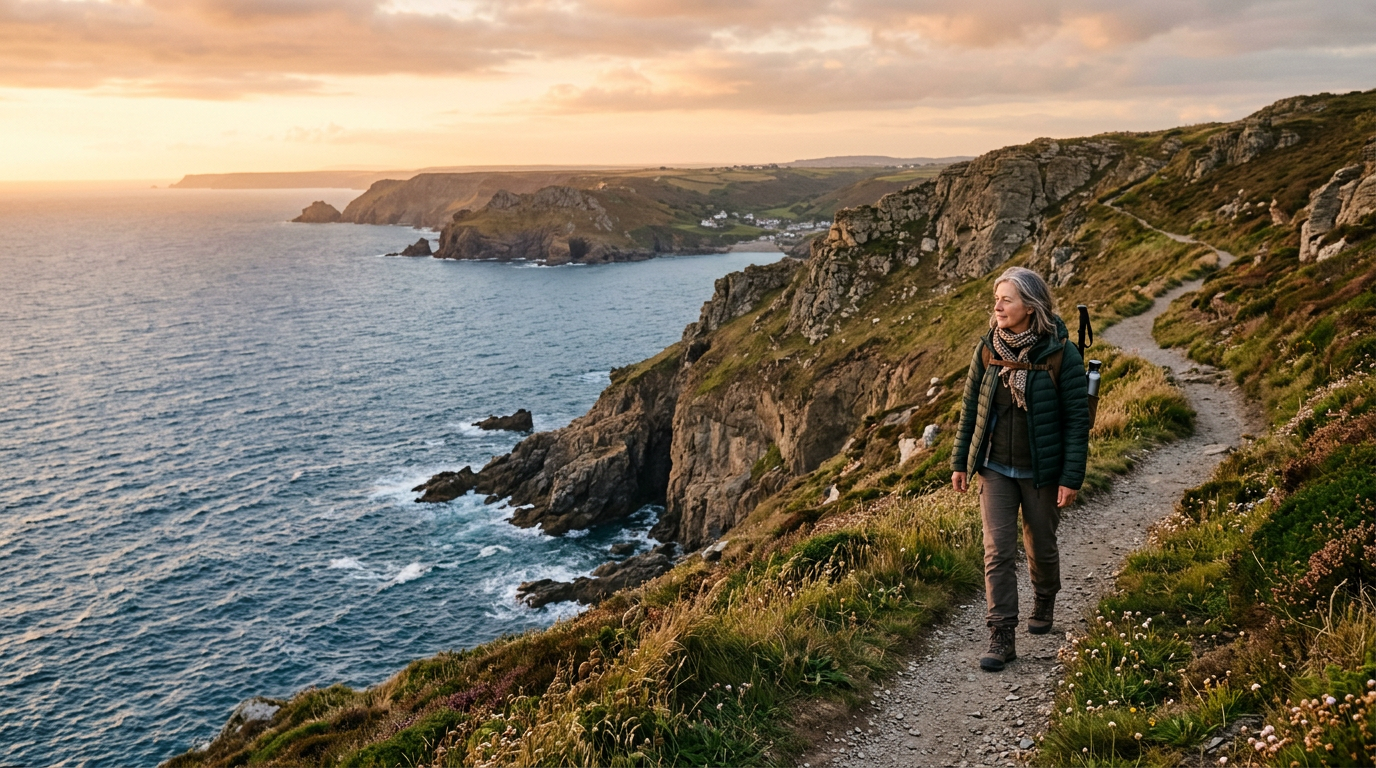
Psychologists who study place attachment — the emotional bonds people form with environments — find that genuine connection to a place requires time. Not time spent accumulating facts about it, but time simply spent being present in it. The slow traveller is, in a sense, temporarily inhabiting a place rather than passing through it. The difference in what they carry home is significant.
The Practical Advantages for Travellers Over 50
There are also pragmatic reasons why slow travel tends to suit experienced travellers particularly well:
- Physical ease. The exhaustion that comes from moving between multiple cities in quick succession is real, and tends to compound over time. Staying in one place — or moving between just two or three over a longer period — allows your body to settle, and your experience of each day to be shaped by genuine curiosity rather than logistical urgency.
- Economic efficiency. Accommodation costs typically fall significantly with longer stays. Weekly or monthly rental rates, negotiated directly with owners or through platforms that cater to longer-term guests, often reduce the cost of accommodation by thirty to fifty percent compared with nightly rates. The money saved can redirect toward experiences rather than logistics.
- Depth over breadth. Travellers in their 50s often report that the thrill of novelty — the simple fact of being somewhere new — is less compelling than it once was, and that what they genuinely want from travel is understanding: of a culture, a landscape, a way of living. Slow travel is architecturally suited to this aspiration in ways that fast travel simply is not.
- Reduced planning burden. A slow travel trip requires far fewer bookings, fewer connecting journeys, and less of the logistical complexity that characterises multi-destination itineraries. Many experienced travellers find that the planning stage becomes less stressful, and the trip itself more spacious.
"Slow travel is not about doing less. It is about allowing more — more time, more depth, more of the unplanned encounters that tend to become the memories that genuinely endure."
Where Slow Travel Works Best
The model is particularly well-suited to destinations that reward extended attention: smaller cities with distinct neighbourhoods, regions with cultural variety that is not immediately apparent, rural areas where the seasonal rhythm of life unfolds over weeks rather than days. Southern France, rural Portugal, the Italian hill towns, and — for those staying closer to home — the coastal communities of Nova Scotia, the wine regions of British Columbia and the lakeland areas of Ontario all offer the kind of layered experience that slow travel is designed to surface.
The key practical question for most travellers planning their first slow trip is what to do with the extra time. This question almost always resolves itself. Once the pressure to cover ground is removed, the day fills — with reading, with walking routes that are chosen rather than scheduled, with conversations that develop because there is time for them, with the particular pleasure of watching a place at its own pace rather than yours.
The traveller who returns from six weeks in two places tends to have a richer account of their experience than the one who returns from six weeks in twelve. That differential is not accidental. It is the direct result of giving time — the one resource that fast travel systematically withholds — back to the experience of actually being somewhere.