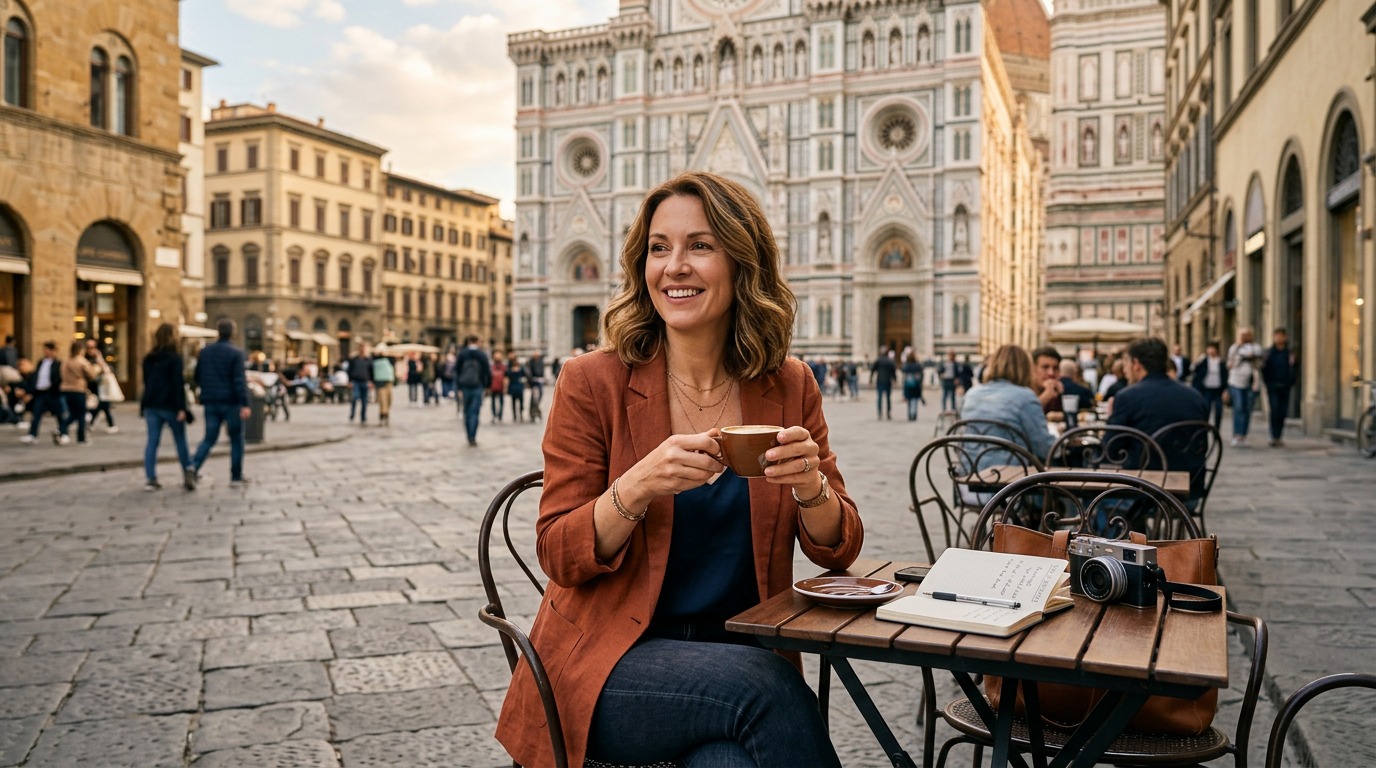
There is an interesting reversal in how people think about solo travel as they get older. In their 20s, many people assume it is a young person's game — adventurous, spontaneous, suited to those without significant responsibilities. By their 40s and 50s, they often discover the opposite is true: solo travel in midlife tends to be not only more feasible but more rewarding, precisely because of the accumulated experience, confidence and self-knowledge that the years provide.
Statistics from tourism research in Canada and the UK over the past decade consistently show that solo travel is growing fastest among adults over 45 — and that first-time solo travellers in this age group report the highest levels of satisfaction. The reasons are instructive. Experienced adults travel with a clearer sense of what they want from a trip, a better-calibrated understanding of their own physical and logistical needs, and significantly less of the social anxiety that can make solo experiences uncomfortable for younger travellers.
What Actually Changes When You Travel Alone
The most commonly reported surprise among first-time solo travellers over 40 is how much more they notice. When you are not managing another person's experience alongside your own, your attention turns fully outward — to the texture of a place, to the conversations you have with people you would never approach in a group, to the small decisions about where to go and what to do that, when made independently, become the fabric of a journey that feels entirely your own.
Solo travel also changes the nature of time. Without the need to negotiate schedules, energy levels or interests with a companion, you move at exactly the pace that suits you — lingering for two hours in a museum where a travelling companion would have been ready to leave in forty minutes, or conversely, abandoning a site after twenty minutes because it does not hold you. This freedom is more significant than it sounds. Many experienced travellers describe the first solo trip as a recalibration of what travel actually means to them, separate from what it has become in the context of shared itineraries.
Practical Considerations Worth Knowing in Advance
For those travelling solo for the first time, a few practical realities are worth understanding before departure:
- Solo supplements are real but increasingly avoidable. Many hotels and cruise lines charge a "single supplement" — sometimes amounting to the full double rate — for solo occupancy. This can be circumvented through apartment rentals, boutique hotels that don't apply the supplement, or travel companies that now specifically cater to solo travellers and offer single-occupancy rates without the premium.
- Safety in solo travel for adults over 40 is generally very well-managed. The same common-sense practices that apply to group travel — sharing itineraries with someone at home, carrying copies of key documents, using reputable accommodation — are equally applicable and sufficient. The heightened safety anxiety that sometimes accompanies the idea of solo travel tends to diminish rapidly once the trip begins.
- Loneliness is less common than anticipated, and more manageable. Most first-time solo travellers report brief moments of wanting to share an experience with someone — which is normal and human — but that sustained loneliness is rare. Structured activities (cooking classes, guided walks, day tours) provide natural social contact without requiring any social effort. Staying in smaller boutique hotels rather than large chain properties tends to create more organic opportunities for conversation.
- The planning process is simpler and more flexible. Solo travel requires booking accommodation and transport for one person with no scheduling dependencies. Changes of plan — a weather-driven detour, an extended stay, a spontaneous route change — require no negotiation. Many experienced solo travellers describe this flexibility as one of the most underrated advantages of the form.
"First-time solo travellers over 40 report the highest satisfaction levels of any demographic. The years bring exactly the qualities that make solo travel most rewarding."
Where to Start
For a first solo trip, most experienced solo travellers recommend choosing a destination that is logistically straightforward — clear transport infrastructure, reliable communication, English widely spoken if that is your primary language — rather than somewhere that requires significant logistical management. The first solo journey is, among other things, a chance to understand what kind of solo traveller you are, and that discovery is easier in conditions that do not require you to also manage complexity.
Portugal, Japan, Iceland and — closer to home — the Canadian Maritimes, the Okanagan Valley and Quebec City all offer the combination of cultural richness, logistical ease and human warmth that tends to make a first solo experience both manageable and memorable. The destination matters less than the decision to go. What most first-time solo travellers over 40 say, when they return, is simply: I should have done this sooner.